
 Search


 English
 Français
 русский
 Español
News
 Home / News / Industry News / Yarn Weight Chart Guide: Categories 0 to 7, Gauge, WPI and Ply Explained
 Yarn Weight Chart Guide: Categories 0 to 7, Gauge, WPI and Ply Explained
 2026.09.02
 Industry News
Two cones from the same mill can both say 4-ply on the label and still sit three categories apart on the yarn weight chart. That gap between strand count and true thickness is one of the most common causes of wrong yarn orders, missed gauges and rejected swatches in knit production.
The chart itself is simple: eight thickness categories, numbered 0 to 7, each tied to a stitch gauge window, a needle range and a rough yardage band. The complications sit around it, in metric counts on cones, wraps per inch on mystery skeins, and suppliers who quote one system while buyers spec another. The sections below cover the standard chart, the measurement methods behind it, and how professional buyers turn it into purchase orders and machine settings.
8official categories, numbered 0 to 7
16-20stitches per 4 inches at category 4
550-800yards per 100 g at category 0
What a Yarn Weight Chart Actually Measures
A yarn weight chart classifies yarn by strand thickness, not by how heavy the ball feels on a scale. The Standard Yarn Weight System, maintained by the Craft Yarn Council, gives every yarn a symbol from 0 to 7 so that a pattern written for one brand can be matched with yarn from any other supplier.
DefinitionYarn weight is the relative thickness of a yarn strand, expressed as a numbered category from 0 (lace) to 7 (jumbo). It predicts stitch gauge and fabric density, never the mass of the ball or cone.
Once the category is fixed, four practical values follow from it:
- Stitch gauge: how many stitches fill 4 inches of knitted fabric
- Needle or hook size: the range the strand can carry without distorting the stitch
- Yardage: how many meters a 100 g unit will yield
- Fabric character: drape, airiness and warmth at a given stitch size
iThe category number is a promise about gauge. Fiber, twist and ply can vary within a single category; the gauge window is the part that stays fixed.
The Standard Yarn Weight Chart: Gauge, Needles and Yardage
The table below is the working reference that mills, pattern writers and buyers converge on: eight rows, four data points each.
| Category | Common names | Knit gauge (stitches per 4 in) | Needle size (mm) | Yardage per 100 g (yd) |
| 0 Lace | cobweb, thread | 32-42 | 1.5-2.25 | 550-800 |
| 1 Super fine | fingering, sock, baby | 27-32 | 2.25-3.25 | 380-460 |
| 2 Fine | sport, baby | 24-26 | 3.25-3.75 | 300-360 |
| 3 Light | DK, light worsted | 21-24 | 3.75-4.5 | 240-280 |
| 4 Medium | worsted, aran, afghan | 16-20 | 4.5-5.5 | 120-240 |
| 5 Bulky | chunky, craft, rug | 12-15 | 5.5-8 | 100-120 |
| 6 Super bulky | roving | 7-11 | 8-12.75 | 60-100 |
| 7 Jumbo | roving, loop | 6 or fewer | 12.75 and up | up to 60 |
Typical yardage per 100 g by category
Ranges summarize commonly published references and use the midpoint where a span exists. Yardage shifts with fiber density, twist and ply count, so treat the table as a screening tool and confirm the final category with a swatch.
Category 4 deserves special attention in wool programs, because it is where classic knitwear sits: 16 to 20 stitches per 4 inches on 4.5 to 5.5 mm needles, with enough body to hold cables and texture.
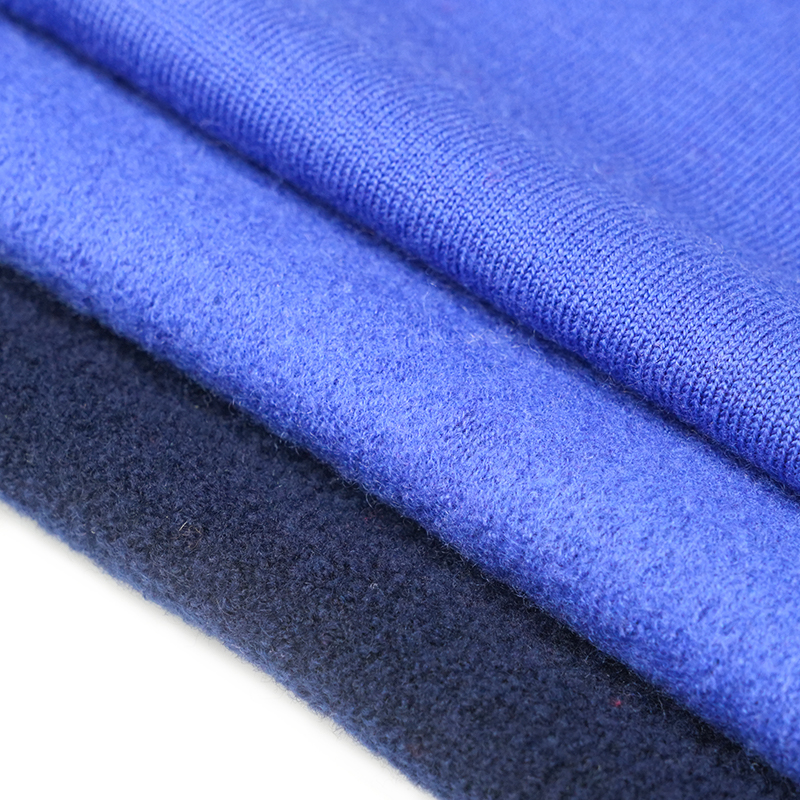 Wool YarnProduct Description:View Product →
Ply Is Not Weight: Reading Yarn Labels Correctly
Ply counts the strands twisted together; the weight category describes the diameter of the finished strand. The two move together only when the individual strands stay the same size.
What ply tells you
- How many strands were twisted together
- Tensile strength and twist balance
- Resistance to pilling in high-wear zones
- Whether an equally thick yarn knits compact or airy
What the category tells you
- Strand diameter after twisting
- The stitch gauge the yarn will produce
- Needle and hook range
- Yardage per 100 g
A 2-ply bulky spins two thick strands, while a 2-ply lace spins two very fine ones; both are honestly labeled 2-ply, yet they sit five categories apart. In the other direction, eight micro-fine plies can still land at category 2. When specifying yarn to a mill, ply on its own identifies almost nothing.
If a pattern calls for category 3, the supplier needs a gauge or a metric count, not the news that the yarn is 4-ply.
How Metric Counts (Nm) Map to Weight Categories
Metric count gives the precision that category numbers cannot: the higher the Nm figure, the finer the yarn, and one short calculation converts any count into a position on the chart.
In the notation mills use, 2/30 means two plies of a 30-count single, where the single runs 30 meters per gram. Meters per kilogram equal the single count times 1,000, divided by the number of plies, and again by any ends knit together.
Worked example: Nm 2/30 equals 30,000 divided by 2, or 15,000 meters per kilogram. Knit on four ends at once, that drops to 3,750 meters per kilogram, about 410 yards per 100 g, which places the combined yarn in category 1, Super Fine.
This is why machine knitters speak in counts while hand knitters speak in categories: the two systems describe the same yarn at different ends of the supply chain. For the full notation, see our guide to what does Nm mean in yarn and how to read it.
Identifying Yarn Weight Without a Label: WPI and Swatching
With the label missing, wraps per inch delivers a thickness estimate in two minutes, and a gauge swatch converts that estimate into a verified category. WPI is simply the number of times a yarn wraps around a one-inch space at relaxed tension.
- Wrap the yarn snugly around a ruler or pencil, edge to edge with no gaps, over exactly one inch.
- Count the wraps at the center of the band, where tension is most even.
- Repeat three times and average the results.
- Compare with published references: roughly 12 wpi sits near sport, category 2, while 11 sits near DK, category 3, and 9 near worsted, category 4.
- Confirm with a swatch: knit a 15 cm square in the intended stitch, measure stitches per 4 inches, and match that number to the gauge column of the chart.
iPublished WPI scales differ from one reference to another, and wrapping tension moves the count. Use wpi to shortlist a category, then let the swatch make the final call.
Matching Weight Categories to Knitting Machines and End Uses
Category numbers translate directly to machine gauge: the closer the yarn's stitch gauge is to the machine's needles per inch, the cleaner and more stable the fabric.
- 12 to 14 gauge flat machines: fine-gauge sweaters and fully fashioned panels, fed with fine counts such as Nm 2/30, often on multiple ends
- 7 gauge flat machines: the mid-weight workhorse for DK to worsted fabrics, blankets and scarves
- 5 gauge and coarser: bulky categories 5 and 6 for outerwear and home textiles
- Circular machines: fine, even worsted-spun counts for T-shirt and dress fabrics, typically category 1 to 2
- Sock machines: category 1 constructions, almost always with a nylon component in high-wear zones
Rule of thumb: match the yarn's stitch gauge to the machine's needle count. When two categories seem possible, knit a machine swatch with the intended number of ends before committing a production lot.
The sock point has commercial weight: pure wool socks usually fail at the heel long before the leg wears out. Blending wool with nylon raises abrasion resistance and shape retention exactly where the stress concentrates.
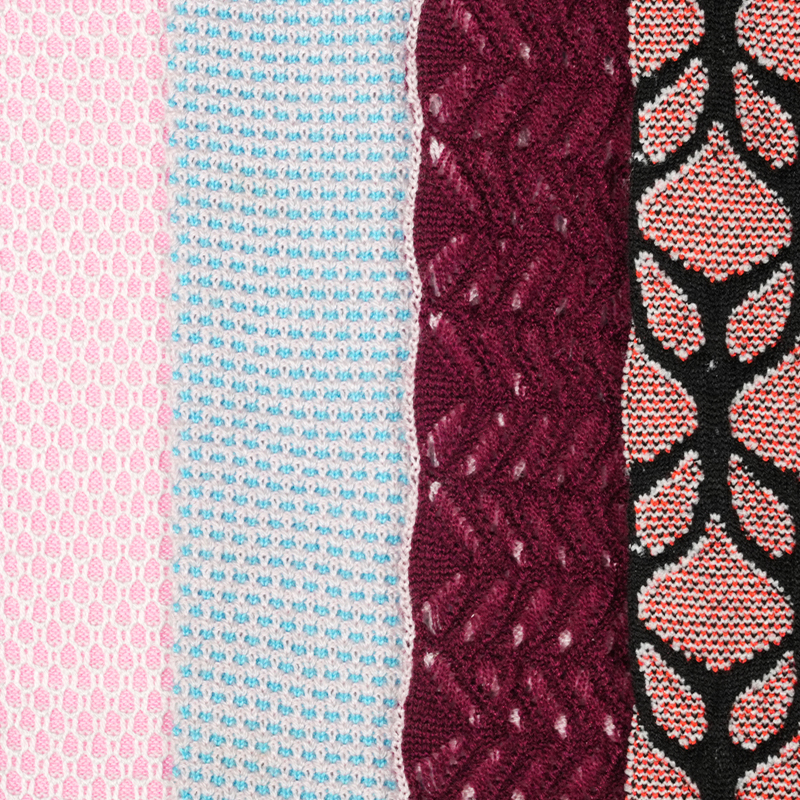 Wool Nylon YarnProduct Description:View Product →
Why Fancy Yarns Sit Outside the Chart
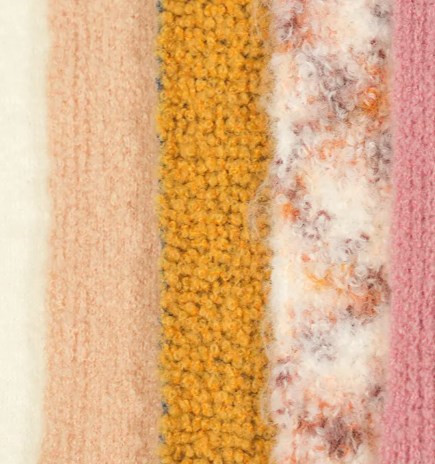
Boucle, feather, brushed and napped yarns sit outside the chart because their diameter changes every few millimeters, so no single category number fits.
The standard system assumes a smooth, even strand, while fancy yarns are engineered for surface effects: loops, piles, feathers and brushed halos that vary along the length. A high-grade boucle can behave anywhere from category 3 to category 6 depending on loop size and the core that carries it.
The practical approach is to measure wpi on the core thread only, treat the result as a starting range, and swatch in the exact stitch structure you intend to produce, because textured stitches shift gauge dramatically on surface yarns.
On fancy yarns, the supplier's swatch is the specification. The chart starts the conversation; the swatch finishes it.
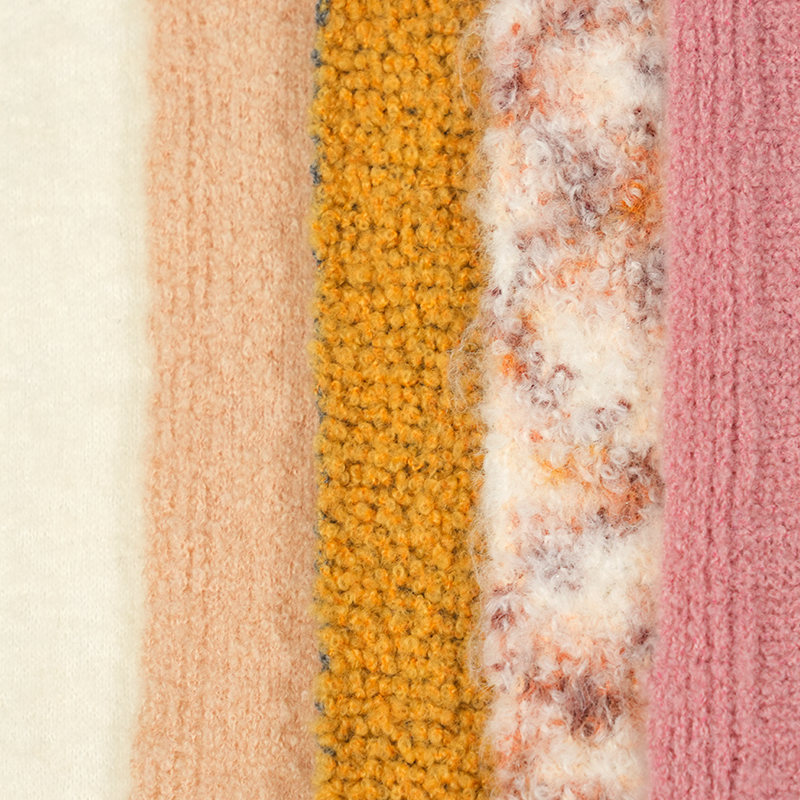 High-grade Boucle YarnProduct Description:View Product →
Using the Yarn Weight Chart as a Sourcing Tool
Treat the chart as a shared language: put the category, the metric count and a target stitch gauge on the same specification sheet, and the mill has what it needs to quote and sample accurately.
- Category and the target gauge window
- Metric count and ply structure, for example 2/26 or 2/30
- Fiber content and any required certifications
- Machine gauge and stitch structure for the end fabric
- End use, since socks, sweaters and home textiles stress yarns differently
Mills that hold stock yarns and offer small-lot sampling shorten this loop considerably. Jiangsu Haoye Fiber Technology Co., Ltd., a worsted and fancy yarn manufacturer with 21 years of spinning experience, supplies stock-supported shades and samples so buyers can verify gauge on real fabric before committing to volume; its worsted yarn range shows how category 3 to 4 wool and blends are typically specified.
A yarn weight chart opens the conversation between buyer and mill. A swatch closes it.
Yarn Weight Chart FAQ
What category is DK yarn?
DK sits at category 3, Light. It knits at 21 to 24 stitches per 4 inches on 3.75 to 4.5 mm needles and yields roughly 240 to 280 yards per 100 g.
Is aran weight the same as worsted?
In the current standard, both fall under category 4, Medium. Aran traditionally runs to the heavier end of the 16 to 20 stitch window, and older references sometimes list it separately, so confirm with gauge rather than the name.
How do I convert an Nm count to a weight category?
Meters per kilogram equal the single count times 1,000, divided by the plies and then by the number of ends knit together. Divide that figure by 9.14 to get yards per 100 g and read the category from the yardage column. A combined 3,500 to 4,200 meters per kilogram, for instance, lands in category 1.
Does fiber type change the weight category?
No. Categories are defined by strand thickness and resulting gauge, not by fiber. Density does shift yardage, since silk or alpaca at the same diameter yields fewer yards per 100 g than wool, which is why the swatch, not the scale, has the final word.



Contact Us for more details
Quick Links
Products
Contact Information
Address: No.2 Huangtai Rd, Yunting, Jiangyin, Jiangsu, China
Tel: +86-510-86018587
Mobile: +86-18261518580
Email: [email protected]
