
 Search


 English
 Français
 русский
 Español
News

Loop Boucle Yarn Guide: Texture, Uses, and Sourcing
 2026.08.12
 Industry News
A flat, smooth yarn can only do so much for a garment's visual interest. Loop boucle yarn brings texture into the fabric itself, so the surface does the design work before a single stitch pattern is added.
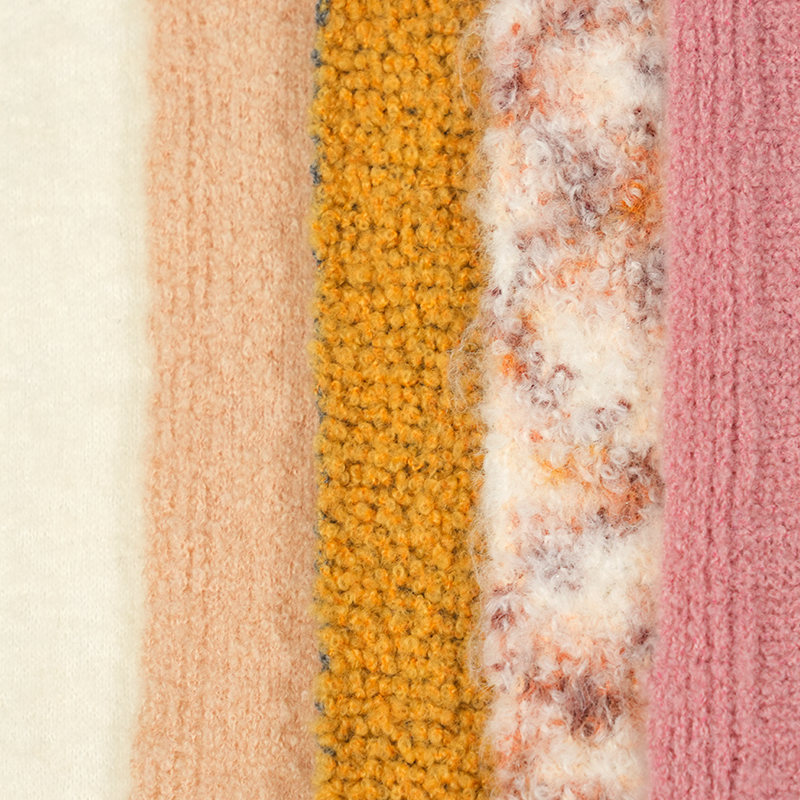
Boucle gets its character from irregular loops and curls twisted into the yarn body itself, created when an effect yarn is overfed against a tighter core strand and locked in place by a binder yarn. The result is a three-dimensional surface that no amount of stitching alone can replicate on a smooth yarn.
Why Texture Changes What a Fabric Can Do
A garment knit from boucle yarn reads as textured and dimensional even in a simple stitch pattern, which is why designers reach for it when a piece needs visual weight without added bulk. The looped structure also traps air, giving finished fabric a warmth-to-weight ratio that flatter yarns cannot match.
Wool boucle Acrylic boucle Cotton boucle Polyester boucle Blended boucle
What Loop Structure Delivers Beyond Looks
- Three-dimensional surface texture that stands out in simple stitch patterns
- Soft, fluffy hand feel suited to sweaters, scarves, and skin-contact knitwear
- Air pockets within the loops that improve warmth without added weight
- Fiber flexibility, since the loop effect works across wool, acrylic, cotton, and blends
Where Boucle Yarn Earns Its Place in a Collection
Fashion knitwear brands use it for sweaters, cardigans, and jackets where texture is part of the design statement rather than an afterthought. Scarf and accessory makers rely on its soft loop surface for a luxury feel at a more accessible price point than pure wool. Home textile producers turn to it for blankets and cushion covers that need visual warmth as much as physical warmth, and upholstery designers use it to add tactile richness to furniture fabrics.
| Attribute | Loop Boucle Yarn | Traditional Smooth Yarn |
| Surface texture | Raised, three-dimensional loops | Flat, uniform surface |
| Visual effect | Built into the yarn itself | Depends on stitch pattern |
| Best fit | Fashion knitwear, accessories, decor | General apparel and basics |
| Cost | Higher due to specialty construction | Typically lower |
Two boucle yarns labeled with the same loop size can still knit up differently depending on binder tension and fiber choice. Always knit a swatch sample before committing to a full production run.
Specifications Worth Checking Before You Commit
Loop size and density determine how pronounced the textured effect appears in the finished fabric, while fiber composition drives softness, warmth, and care requirements. Twist level affects how well the loop structure holds up over repeated wear and washing, so it is worth requesting pilling resistance data alongside a physical sample rather than relying on the spec sheet alone.
Partnering With an Experienced Producer
Consistent loop formation depends on tightly controlled overfeed and twist parameters during spinning, which is not something every yarn mill can hold steady batch after batch. A capable boucle yarn manufacturer should be able to share evenness and strength test data, plus offer custom loop size, fiber blend, and color development for your specific collection.
Frequently Asked Questions
Is boucle yarn harder to knit with than smooth yarn?
It can require slightly more care since the loops can catch on needles or hooks, but most knitters and machines adapt quickly once tension is adjusted for the yarn's texture.
Does boucle yarn pill more than smooth yarn?
Pilling risk depends more on fiber composition and finishing than on the loop structure itself, so checking pilling resistance test data is more useful than assuming based on texture alone.
Can boucle yarn be machine washed?
Washability depends on the fiber blend used, with acrylic and synthetic-blend boucle yarns generally more machine-washable than pure wool versions.
What loop size works best for sweaters versus home textiles?
Smaller, tighter loops tend to suit wearable knitwear for comfort and drape, while larger, more pronounced loops are often chosen for blankets and decorative textiles where visual texture matters more.



Contact Us for more details
Quick Links
Products
Contact Information
Address: No.2 Huangtai Rd, Yunting, Jiangyin, Jiangsu, China
Tel: +86-510-86018587
Mobile: +86-18261518580
Email: [email protected]
