
 Search


 English
 Français
 русский
 Español
News
 Home / News / Industry News / Does Acrylic Shrink? Wash, Dryer and Iron Rules for Acrylic Yarn and Knits
 Does Acrylic Shrink? Wash, Dryer and Iron Rules for Acrylic Yarn and Knits
 2026.09.16
 Industry News
Type "does acrylic shrink" into any knitting forum and the same two stories appear: a favorite acrylic beanie that went loose after a season of wear, and a machine-washable sweater that came out of a hot tumble cycle a size smaller. Both reports are accurate, and they describe two different behaviors that often get mixed up. Acrylic barely moves in a normal 30 to 40 degree Celsius wash, yet it contracts by several percent, mostly permanently, once heat passes the temperature at which its fibers were heat-set during production.
That distinction matters twice over: a home knitter wants to know whether an oversized cardigan can be fixed in the laundry, while a knitwear buyer needs to know how garments hold their labeled measurements across years of consumer washing, one of the most common quality complaints in the trade.
7%The realistic shrinkage risk for acrylic sits in the dryer and the iron, not the washing machine. A high-heat tumble cycle can pull an acrylic knit in by 5 to 7 percent, while a 40 degree wash usually moves it by around 1 percent.
Does Acrylic Shrink in the Washing Machine?
At standard washing temperatures, no: acrylic is among the most wash-stable fibers in regular use, typically changing by less than 2 percent across dozens of cycles at 30 to 40 degrees Celsius.
DefinitionAcrylic fiber is a manufactured fiber in which the fiber-forming substance is a long-chain synthetic polymer composed of at least 85 percent by weight of acrylonitrile units, the criterion set by the US Textile Fiber Products Identification Act. Nearly every acrylic yarn on the market is built on this polymer, better known as polyacrylonitrile.
Three fiber properties explain that stability:
- No scales: unlike wool, the acrylic surface is smooth, so heat, moisture and agitation cannot lock neighboring fibers together into felt.
- Low moisture uptake: acrylic absorbs under 2 percent of its weight in water, so the yarn barely swells and the fabric barely relaxes.
- Heat-set memory: the yarn is thermally set during production, and below that setting temperature the structure stays locked.
The margin is not unlimited. Push wash water above roughly 60 degrees Celsius and the fabric begins to relax toward its heat-set dimensions. One hot cycle does little, but the effect accumulates, and knits move faster than wovens because their loops carry stored tension.
Where Does Acrylic Shrink Happen? Dryers, Irons and Hot Water
Heat, not water, triggers real acrylic shrinkage, and the critical zone begins around 85 to 95 degrees Celsius, the glass transition range of the polyacrylonitrile polymer.
Below that range the polymer chains stay frozen and the fabric keeps its dimensions. Above it, the chains gain mobility, the heat-set structure relaxes, and knitted fabric pulls inward. Moist heat relaxes the set structure at lower temperatures than dry heat, which is how a 60 to 75 degree dryer cycle produces gradual contraction and why dryer-shrunk acrylic rarely springs back. An iron is riskier still: acrylic softens far below cotton ironing temperatures, so a hot plate glosses the surface first and can fuse it.
2%maximum typical change per 40 degree wash
7%possible relaxation per aggressive hot dryer cycle
130degrees Celsius, the safe iron ceiling for acrylic
Typical dimensional change after laundering, by fiber and condition
Indicative ranges from textile care references; actual change depends on heat setting, twist, gauge and finishing.Normal wash, 30-40 degrees C
- Shrinkage stays under 2 percent
- Loft and softness are retained
- No felting, colors remain stable
- Shape recovers with simple reshaping
High heat, dryer or 60 C plus water
- 3 to 7 percent relaxation per cycle
- Hand flattens, surface turns dull
- Change is rarely reversible
- Risk compounds with every cycle
Does Acrylic Shrink More Than Wool and Cotton?
No. Across every realistic laundry condition, acrylic shrinks far less than wool and meaningfully less than cotton. Its weakness is heat tolerance, not dimensional stability.
| Fiber | Normal wash, 30-40 degrees C | Hot water or hot dryer | Felting risk | Safe iron ceiling |
| 100% acrylic | Under 2% | 3 to 7% | None | About 130 degrees C |
| Cotton | 3 to 5%, up to 10% on first wash | 5 to 8% | None | Up to 200 degrees C |
| Wool | 2 to 5% relaxation | 10 to 25% or more | High | About 150 degrees C |
| Polyester | 1 to 3% | 1 to 3% | None | About 150 degrees C |
The trade-off in one lineCotton and wool shrink more but forgive a hot iron; acrylic holds its measurements yet is the least forgiving fiber under one, which is why acrylic care labels emphasize temperature over agitation.
Can You Shrink an Acrylic Sweater or Beanie on Purpose?
Partly, and only with trade-offs: hot washing and hot drying will relax an oversized acrylic knit by a few percent, but the change is gradual, uneven, and paid for in softness.
Because acrylic cannot felt, it never pulls in the way wool does in hot water. What is achievable is relaxation shrinkage: releasing the tension stored in knitted loops with heat, then locking it in. Each aggressive cycle may add 2 to 5 percent of contraction, and the fabric loses hand and loft every time.
- Wash the piece hot, at 60 degrees Celsius, on a gentle cycle inside a mesh bag.
- Tumble dry on the highest heat the yarn label allows, checking the fit every ten minutes.
- Reshape by hand while the fabric is still warm, and measure against the target dimensions.
- Stop after one or two cycles; beyond that the fabric stiffens faster than it shrinks.
If the goal is a stretched beanie rather than a smaller sweaterBlocking over a smaller form with gentle steam from 2 to 3 centimeters away re-tensions the loops without cooking the fiber. Never press a hot iron directly onto acrylic.
How Yarn Buyers Manage Shrinkage Risk with Acrylic Blends
For product teams, shrinkage is engineered at the blend stage: the acrylic share stabilizes the knit, while the partner fiber decides which care rules the finished garment must follow.
A wool acrylic blend is the clearest example. Wool brings warmth, loft and breathability; acrylic adds easy care, recovery and a calmer cost base. The blend still follows wool care rules, because the wool share felts if washed hot with agitation, but the garment holds its shape far better than pure wool through consumer use.
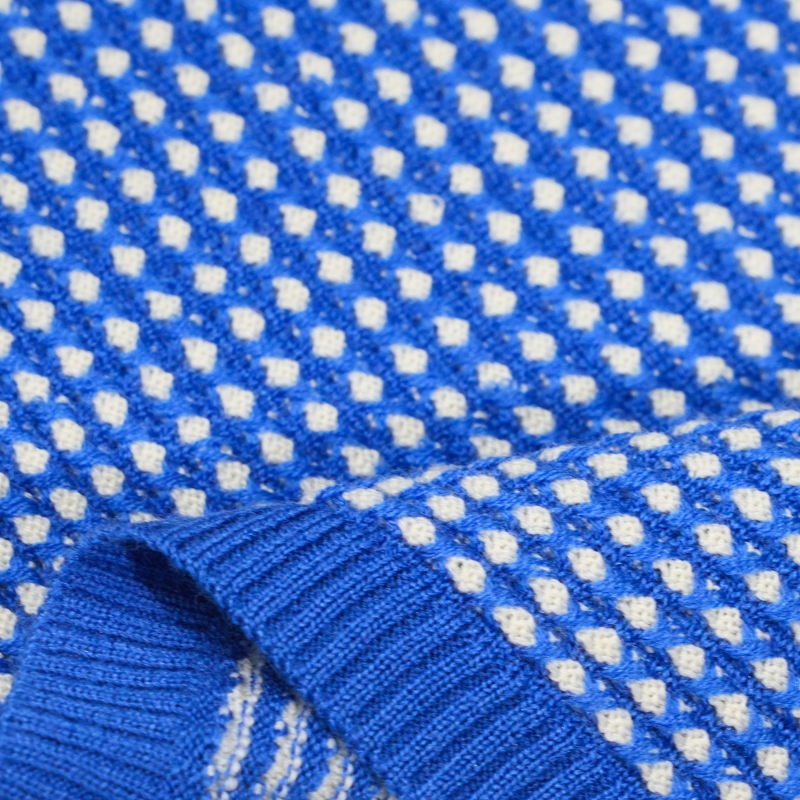 Wool Acrylic YarnProduct Description:View Product →
Tencel, the branded lyocell fiber, is increasingly paired with wool and acrylic to add drape and moisture management. Lyocell swells when wet, so first-wash relaxation runs slightly higher, and experienced spinners control it through yarn finishing and pre-relaxation. A deeper comparison is available in our guide to how the Tencel wool acrylic blend compares to pure fibers.
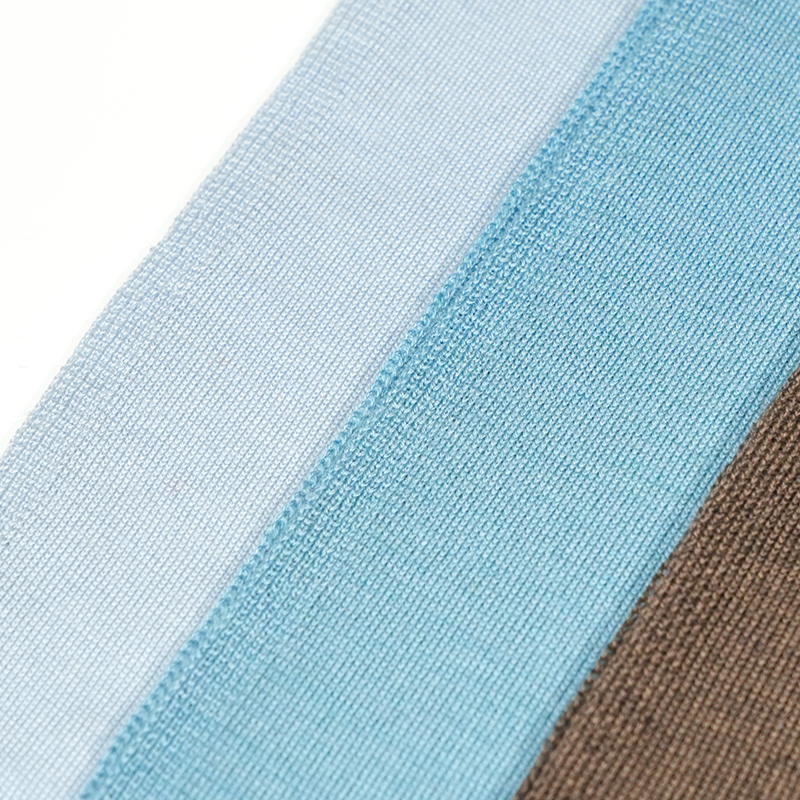 Tencel Wool Acrylic YarnProduct Description:View Product →
For socks and other high-wear knits, nylon supplies abrasion resistance while acrylic contributes wash-fast dimensional stability, so the finished product keeps its shape through repeated laundering.
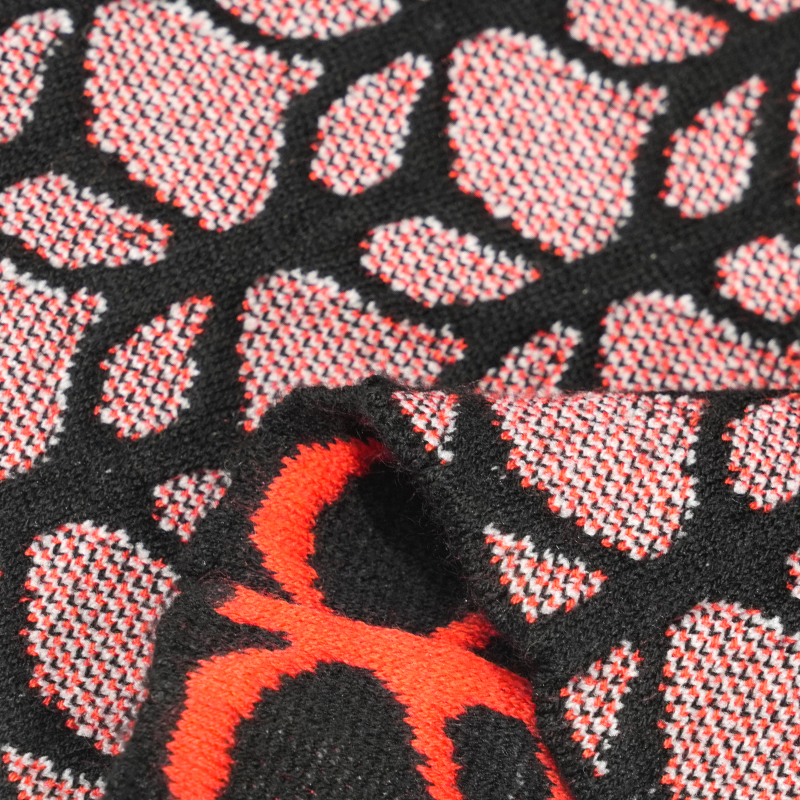 Wool Nylon Acrylic YarnProduct Description:View Product →
Jiangsu Haoye Fiber Technology Co., Ltd., a yarn manufacturer with 21 years of spinning experience, runs 20,000 spindles of sirospun and compact spinning plus five fancy-yarn lines, producing about 4,000 tons a year under OEKO-TEX aligned standards. Buyers can pull sample yarn from stock, wash-test a prototype knit, and verify real dimensional change before committing to production through the company's custom acrylic blend development service.
Wash Rules That Keep Acrylic Knits in Shape
Five care rules cover nearly every acrylic shrinkage scenario a consumer or a care-label writer will encounter.
- Wash cool: 30 to 40 degrees Celsius, gentle cycle, mesh bag for structured knits.
- Dry low or flat: skip the high-heat tumble cycle, the main source of 3 to 7 percent relaxation shrinkage.
- Iron rarely and cool: keep the plate below about 130 degrees Celsius, or steam from a short distance.
- Store folded: hanging lets heavy acrylic sweaters relax out at the shoulders over months.
- Wash-test a swatch: knit a 20 by 20 centimeter square, treat it exactly as the finished garment will be treated, and measure the difference before cutting or shipping.
If the label says cold wash and low dry, an acrylic knit will outlast the trend it was bought for.
Frequently Asked Questions About Acrylic Shrinkage
Does acrylic shrink in cold water?
No. At or below 40 degrees Celsius, acrylic fabric stays within roughly 1 to 2 percent of its original dimensions, a change that is imperceptible in wear and does not accumulate meaningfully over cycles.
Will a tumble dryer shrink acrylic yarn items?
It can. High dryer heat relaxes the heat-set structure of the fiber and can contract a knit by 3 to 7 percent per aggressive cycle, and repeated cycles add more. Low-heat tumbling or flat drying avoids it.
Can you shrink acrylic to a smaller size on purpose?
Only a little. Hot washing and hot drying release loop tension for a few percent of contraction, unevenly and at the cost of softness. For a true size change, reshaping, re-knitting or elastic reinforcement works better than laundry.
Does a wool acrylic blend shrink like pure wool?
The acrylic share will not felt, but the wool share still can when washed hot with agitation. Follow the wool care rules on the label; the acrylic improves recovery and easy care rather than making the blend felting-proof.



Contact Us for more details
Quick Links
Products
Contact Information
Address: No.2 Huangtai Rd, Yunting, Jiangyin, Jiangsu, China
Tel: +86-510-86018587
Mobile: +86-18261518580
Email: [email protected]
