
 Search


 English
 Français
 русский
 Español
News
 Home / News / Industry News / Craft Yarn Council Yarn Weight System Explained: Chart, Gauge and WPI Guide
 Craft Yarn Council Yarn Weight System Explained: Chart, Gauge and WPI Guide
 2026.09.23
 Industry News
Yarn Standards, Explained
A knitwear developer specs a sweater at 18 stitches over 4 inches, the pattern archive calls the yarn worsted weight, and the sample cone arriving from the mill carries only the marking 2/30 Nm. That gap between a craft label and a factory count is exactly what the Craft Yarn Council yarn weight system exists to close.
The Craft Yarn Council (CYC) is the trade body representing leading yarn companies, accessory manufacturers, publishers and consultants in the needle-arts industry. Its Standard Yarn Weight System sorts knitting and crochet yarns into numbered thickness categories, from 0 (lace) to 7 (jumbo), and ties each number to a gauge range plus recommended needle or hook sizes. Read the system correctly and any pattern can be matched to any skein on the shelf; misread it and a sweater comes out two sizes off target. The sections below work through the chart, the gauge logic, the WPI test and the buyer translation.
What the Craft Yarn Council Yarn Weight System Actually Defines
The system is a thickness standard, not a fiber standard: it grades the strand itself and the gauge each grade should produce, which is why one number can appear on wool, acrylic and cotton yarns alike.
Core Definition
Yarn weight describes the diameter of the strand, not the grams on the ball band. The CYC standard encodes that diameter as a number from 0 to 7 inside the official yarn weight symbol, printed with a gauge range and recommended needle or hook sizes.
The symbol is the small skein pictogram with the number in its center, and the council publishes downloadable symbol files so labels and patterns present identical information. Its latest revision adds a Size 8 and plus symbols, covering yarns beyond jumbo and strands that fall between two printed categories. A compliant ball band tells you four things:
- The category number inside the yarn weight symbol, 0 through 7
- A knit and crochet gauge range counted over 4 inches (10 cm)
- A recommended needle or hook size range in US and metric sizing
- Care and blocking guidance carried by the council's supporting symbols
Because the categories grade thickness rather than fiber, a category 4 wool and a category 4 cotton should both knit at 16 to 20 stitches per 4 inches, even though the fabrics feel nothing alike.
Standard Yarn Weight System Chart: Categories 0 to 7 with Gauges
The chart below is the working core of the system: each category pairs common yarn names with a stitch gauge over 4 inches and the needle range that produces it.
8
standard categories, numbered 0 to 7
16-20
stitch spread inside category 4 alone
9-12
wraps per inch for a typical worsted strand
| Category | Common yarn names | Knit gauge, stitches per 4 in | Recommended needles |
| 0 Lace | Fingering 10-count crochet thread | 33-40 | 1.5-2.25 mm |
| 1 Super Fine | Fingering, baby | 27-32 | 2.25-3 mm |
| 2 Fine | Sport, baby | 23-26 | 3-3.75 mm |
| 3 Light | DK, light worsted | 21-24 | 3.75-4.5 mm |
| 4 Medium | Worsted, afghan, aran | 16-20 | 4.5-5.5 mm |
| 5 Bulky | Chunky, craft, rug | 12-15 | 5.5-8 mm |
| 6 Super Bulky | Roving | 7-11 | 8-12.75 mm |
| 7 Jumbo | Jumbo roving | 6 or fewer | 12.75 mm and up |
Two traps hide here. UK and Australian patterns lean on ply-based names, and 8-ply yarn lands near a category 3 rather than matching a number one to one. And since the updated standard includes Size 8 plus symbols, a skein carrying a plus sign is flagging an in-between thickness, not an error.
Gauge Is the Real Contract: Why Two Number 4 Yarns Differ
The category number gets you to the right shelf; the gauge on your swatch decides whether the piece fits. Category 4 alone spans 16 to 20 stitches over 4 inches, a 25 percent spread wide enough to change a garment size.
Run the arithmetic on a 200-stitch sweater body: at 16 stitches per 4 inches it measures 50 inches around, at 20 stitches per 4 inches it measures 40. Same category, ten finished inches apart, with yardage, needle size and fit all swinging on one number.
10 in
the finished gap between the loose and the tight end of category 4 on the same 200-stitch body
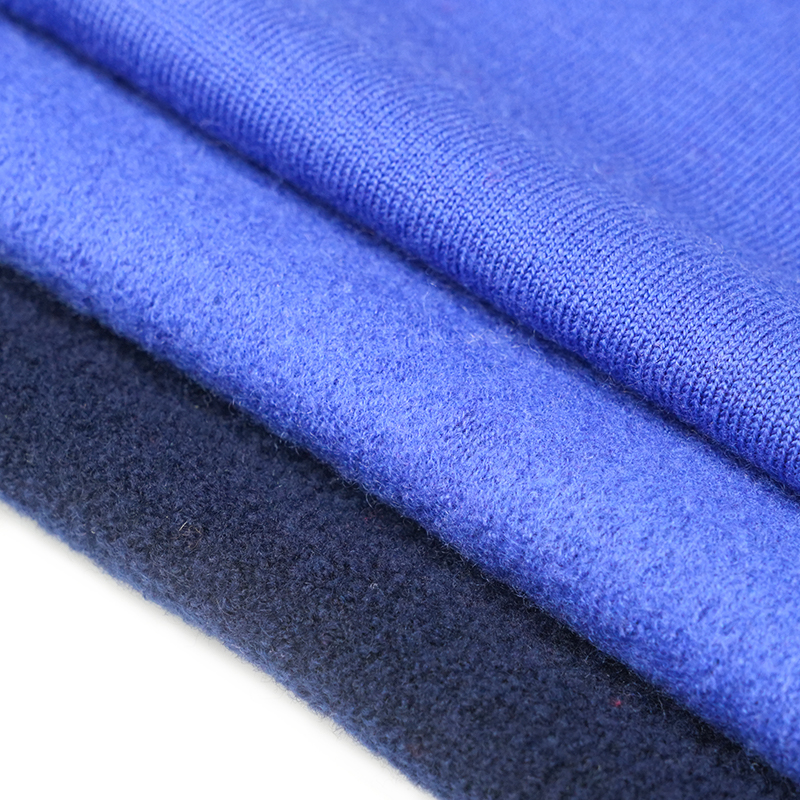
Treat the printed range as an entry ticket, then confirm it with a swatch. Development teams keep one dependable medium-weight base in the sample room for the same reason: a stock 100% wool yarn with a published 16-to-20-stitch gauge keeps swatch rounds predictable and substitution math honest.
 Wool YarnProduct Description:View Product →
Typical Knit Gauge by Category, Stitches per 4 in
Loft, twist and ply construction push a yarn toward one end of its band, so read the bars as orientation and let a knitted swatch settle where a specific strand lands.
Wraps Per Inch: Classifying an Unlabeled Skein in Two Minutes
Wraps per inch (WPI) is the fastest way to classify a skein with a missing ball band, and it needs nothing more than a pencil and a ruler.
- Wrap the strand snugly around a pencil or ruler of consistent width, letting wraps touch without compressing them.
- Count how many wraps fit inside exactly 1 inch, from the center of the first wrap to the center of the last.
- Take two or three readings along the strand and average them, because uneven twist skews a single measurement.
- Compare the average to a WPI chart, then confirm the category with a small stockinette swatch before committing yardage.
The numbers shift slightly between published charts, but the anchors hold: a typical worsted strand wraps 9 to 12 times per inch, while a fingering strand lands closer to 16 to 20.
WPI
WPI measures how many times a strand wraps around one inch of ruler. It approximates the CYC category but never replaces the gauge a pattern needs, because two yarns with identical WPI can knit differently when one is lofty and the other dense.
Texture bends the reading: haloed strands read heavier than the fabric they produce, dense tightly twisted plies read thinner, and when WPI and the swatch disagree, trust the swatch.
Matching Yarn Weight to Project and Machine
Weight choice trades fabric density against project size and the machine or needles doing the work, and the gauge ranges make the trade explicit.
- Socks and fine shawls: category 1, knitting at 27 to 32 stitches per 4 inches for dense, wear-resistant fabric
- Baby pieces and tops: categories 2 and 3, where sport and DK weights give drape without bulk
- Adult sweaters and blankets: category 4, the balance point between knitting speed and fabric weight
- Hats, cowls and quick throws: categories 5 and 6, where 12 to 15 stitches per 4 inches or fewer finish fast
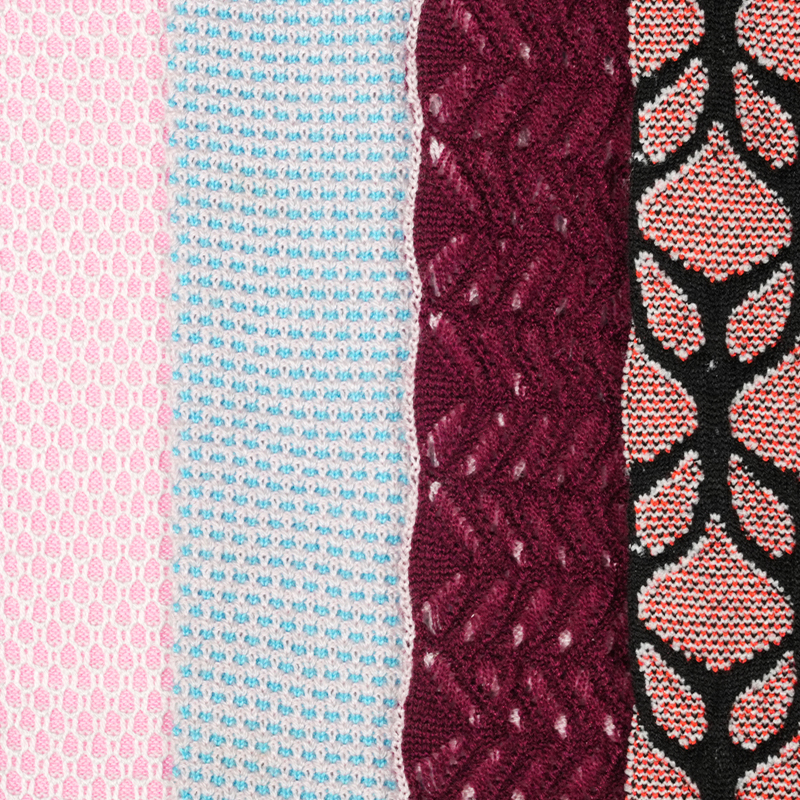
The same translation runs through machine knitting. Flat-bed machines building sweater panels, circular frames producing yardage and sock frames all match a yarn count to needle spacing, so a developer who thinks in categories still speaks in counts on the floor. Where abrasion resistance rules the spec, as with a sock-weight yarn, blending nylon into wool adds wear life without shifting the gauge range.
 Wool Nylon YarnProduct Description:View Product →
Hand-feel travels with fiber, not with the number: a category 3 wool-nylon sock yarn and a category 3 silk blend behave nothing alike on the same needles, even though both knit to the same band.
From Category Number to Spec Sheet: Translating the System for Sourcing
Mills sell yarn by metric count, not by CYC category, so a buyer's real task is converting the craft number into a count range, a twist level and an approved swatch.
The metric count (Nm) states how many meters of yarn make one gram, so Nm 10 equals 10,000 meters per kilogram, and cones carry designations such as 2/30 Nm, a two-fold yarn built from Nm 30 singles. This guide to what Nm means in yarn counts covers the full notation. The sourcing point: category 4 describes a fabric outcome, while Nm, ply and twist describe inputs a spinning plant can hold to tolerance.
Ball-Band Logic
- Unit: one number, 0 to 7
- Fixed by: stitches per 4 inches on the label
- Audience: shoppers matching a pattern
- Strength: instant and universal
Spec-Sheet Logic
- Unit: Nm, tex or denier with ply and twist
- Fixed by: meters per gram at the mill
- Audience: spinners, knitters and QA teams
- Strength: measurable and repeatable
The bridge between the two logics is a target gauge: a stitches-per-4-inch window plus fabric weight in grams per square meter, answered with count and twist proposals and verified on a knitted swatch.
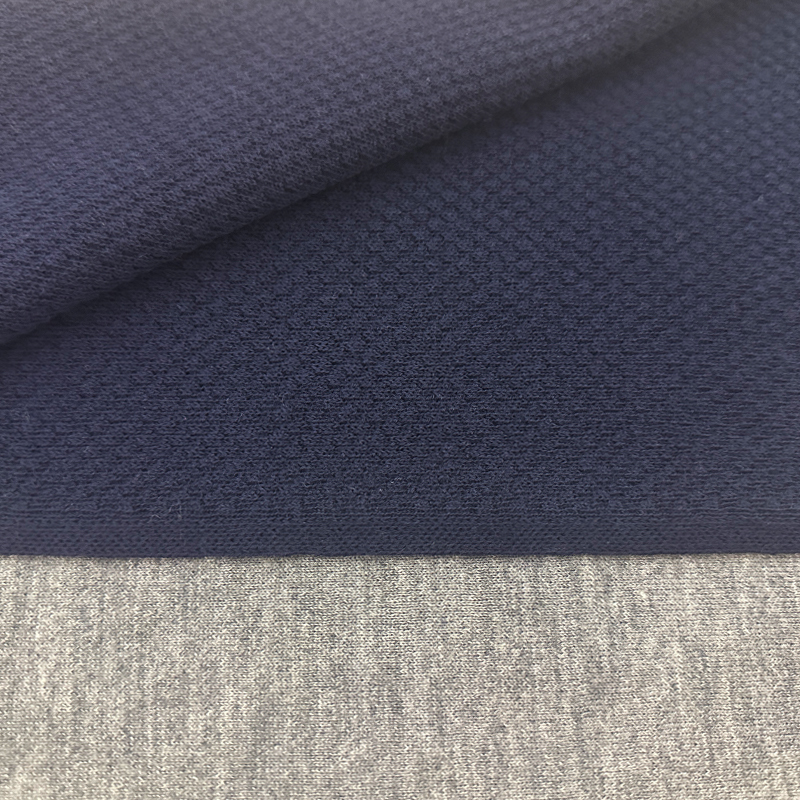
The discipline applies at the luxury end too: a cashmere-wool blend aimed at category 3 knitwear needs count and bloom confirmed on a sample before bulk, because halo changes the fabric long before gauge numbers move. Stock shade cards, sample cones and small-batch runs cut that verification loop from weeks to days.
 Cashmere Wool YarnProduct Description:View Product →
Where no stock count hits the target, a custom yarn specification closes the gap: fiber mix, count, twist and shade agreed on samples before the first production run.
Frequently Asked Questions
Is Aran weight the same as worsted weight?
Both sit inside category 4 (medium). Aran yarns tend toward the heavier end of the 16-to-20-stitch band, so treat the two as near-equivalents and let a swatch make the final call when a pattern is particular about fit.
Is 8-ply yarn always weight 4?
No. Ply counts how many strands are twisted together, not how thick the result is. A firm 8-ply and a soft 4-ply can land in the same category, so the gauge range or a WPI test settles the question.
What does the yarn weight symbol on a ball band mean?
It is the CYC standard symbol: a pictogram with the category number inside, printed next to the gauge range and recommended needle or hook sizes so a shopper can match a pattern to a skein before swatching.
Can I substitute a different yarn weight than the pattern calls for?
Yes, but not one-for-one. Changing category changes stitch count, yardage and fabric behavior, so recalculate the gauge, compare meters per 100 grams with the original yarn and knit a fresh swatch before buying yardage.



Contact Us for more details
Quick Links
Products
Contact Information
Address: No.2 Huangtai Rd, Yunting, Jiangyin, Jiangsu, China
Tel: +86-510-86018587
Mobile: +86-18261518580
Email: [email protected]
