
 Search


 English
 Français
 русский
 Español
News
 Home / News / Industry News / Yarn Skeins Explained: Types, Weights, and a Buyer's Guide for Knitters and Mills
 Yarn Skeins Explained: Types, Weights, and a Buyer's Guide for Knitters and Mills
 2026.10.14
 Industry News
An order of 100 g wool yarn arrives at a knitting studio, and the delivery looks nothing like the tidy balls in craft-store photos: each unit is an oblong coil of yarn, folded once around itself and secured with a paper band. That coil is a yarn skein, and it is the most common package for hand-knitting yarn, hand-dyed yarn, and small-lot mill samples. The more you understand yarn skeins, the better you can spec the right yarn, estimate yardage, and avoid tangle-driven waste.
100 g standard retail skein weight 160-200 m typical worsted yardage 600+ m one production cone equivalent
What Is a Yarn Skein?
A yarn skein is a length of yarn wound into a loose, oblong coil, then twisted into a loop so it can be stored, shipped, dyed, and knitted without tangling into a permanent knot. The twist-and-fold construction is what sets it apart from every other yarn package.
Definition
A yarn skein is a coiled bundle of yarn, wound on a reel at a fixed circumference, then folded and secured with ties or paper bands, with a defined weight and yardage.
A skein sits under almost no tension, so the fibers relax, accept dye evenly, and keep their hand feel intact. Most retail skeins weigh 50 g or 100 g, and the label band carries fiber content, weight, yardage, and care instructions. Knitters can pull from the center or from the outside.
For industrial buyers, the skein is the standard format for color matching, lab dip approval, and small-batch production. You can measure twist per meter, test shrinkage, and wash the sample the way a finished garment will be treated. Mills also hold stock yarn as blank skeins that can be dyed to a lab dip in 24-48 hours. A fancy boucle or brushed yarn, in particular, shows its true surface structure only in a relaxed skein, not under cone tension.
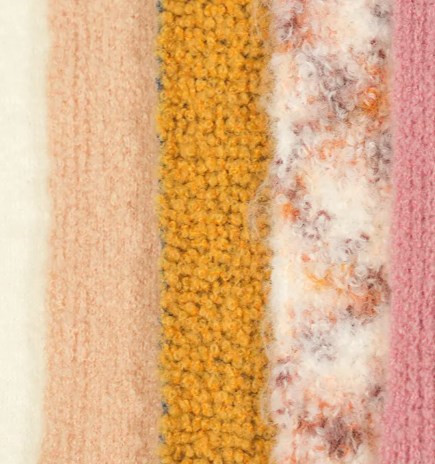
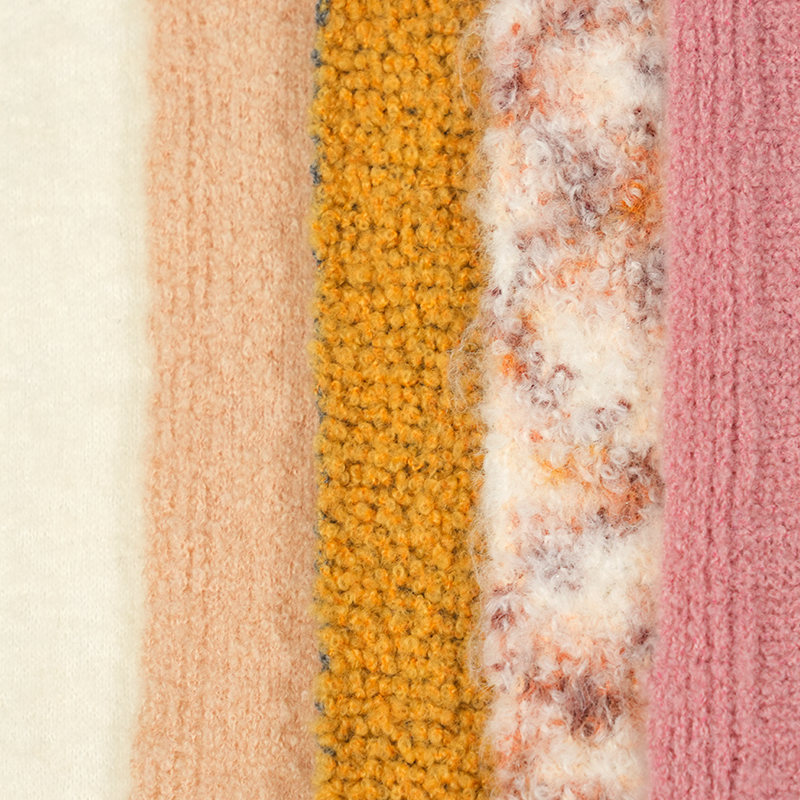 Premium Boucle Yarn with Textured Loop SurfaceThis boucle yarn offers a distinctive looped texture that stands out in relaxed skein form, making it ideal for evaluating surface structure and hand feel before bulk production.View Product →
Yarn Skeins vs Hanks, Balls, Cakes, and Cones: Key Differences
The difference between a skein, hank, ball, cake, and cone comes down to winding geometry, tension, and who the package is made for. Each form changes how the yarn behaves during dyeing, knitting, and machine feeding.
A hank is a large open ring, often 200 g or more, that needs a swift before knitting; hand-dyers use hanks because the open loop lets dye reach every fiber. A ball is a sphere wound around a core and pulled from the outside; it stays in a bowl but rolls. A cake is a center-pull cylinder, flat on top and bottom, that feeds evenly. A cone is a tapered industrial package wound under high tension at 600-1,000 m/min; one cone can hold several kilograms.
| Form | Shape | Pull method | Typical use |
| Skein | Oblong twisted loop | Center or outside | Retail, hand-dyeing, mill samples |
| Hank | Large open ring | Needs a swift | Hand-dyeing, yarn testing |
| Ball | Sphere | Outside | Hand knitting, craft |
| Cake | Flat cylinder with center hole | Center | Rewound yarn, smooth feeding |
| Cone | Tapered cylinder | Center, machine feed | Machine knitting, weaving |
Quick rule: twisted loop with a band = skein, open ring on a swift = hank, flat cylinder with a center hole = cake, tapered cone = machine package
How Much Yarn Is in a Skein? Weight, Yardage, and Count
A standard retail skein holds a fixed weight, usually 50 g or 100 g, and its yardage is set by the yarn count and weight category. The same 100 g of worsted wool can run 160 m, while 100 g of lace-weight merino can reach 600 m, which is why patterns always specify both.
~500 mLace per 100 g
~225 mDK per 100 g
~180 mWorsted per 100 g
~120 mBulky per 100 g
Typical yardage per 100 g skein by yarn weight category
| Category | Typical Nm count | Stitches per 10 cm | 100 g yardage |
| Lace | Nm 2/48-2/60 | 28-34 | 400-600 m |
| Fingering | Nm 2/36-2/40 | 24-27 | 320-400 m |
| Sport | Nm 2/28-2/32 | 22-24 | 250-320 m |
| DK | Nm 2/24-2/28 | 20-22 | 210-240 m |
| Worsted | Nm 2/16-2/20 | 16-19 | 150-200 m |
| Bulky | Nm 2/8-2/12 | 10-14 | 90-140 m |
Yardage rule: divide the pattern yardage by the yardage on the skein band, then round up to the next full skein. Order one extra skein per color to protect against dye-lot variation.
What to Check Before You Buy or Specify Yarn Skeins
Before ordering skeins, verify four properties: twist, dye-lot consistency, count evenness, and relaxed yardage after washing. These determine whether the yarn knits evenly and whether the color matches across a production run.
- Twist per meter. Worsted wool typically runs 300-600 TPM; higher twist means crisper stitches, lower twist means softer drape and more pilling.
- Twist direction. S-twist and Z-twist behave differently when plied; confirm the direction before production.
- Dye-lot continuity. All skeins for one order should come from one dye lot; two lots can differ by several shade steps.
- Count evenness. Measure the metric count at several points on a skein; a coefficient of variation above 3% creates visible stripes.
- Relaxed yardage. Wash-test one skein; wool can shrink or grow 3-8% depending on finishing, which changes usable yardage.
For wool skeins, the reference point is a stable, well-twisted worsted yarn. The count gives the first clue, so read what Nm means in yarn before comparing supplier quotes.
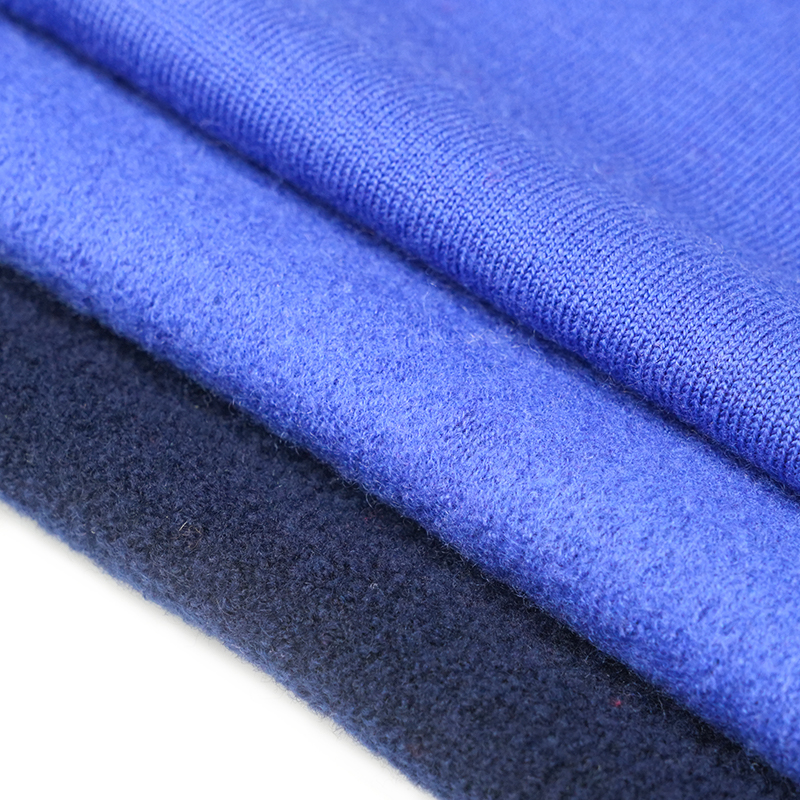 Pure Wool Yarn for Skein Sampling and ComparisonA stable, well-twisted worsted wool yarn serves as a reliable reference point for checking count, twist, and shrinkage when comparing supplier quotes and preparing lab dips.View Product →
If the order needs a specific package, work with a supplier that can customize your yarn package: skein weight, banding, dye-lot splits, and re-winding into cakes or cones.
Sampling rule: request a full skein, not a cut length, for evaluation. A cut length hides the real twist geometry and the way the yarn behaves when relaxed after unwinding.
From Mill to Skein: How Commercial Wool Yarn Is Wound
Commercial skeins start on the spinning frame and end on a skein-winding line; the whole sequence takes under an hour per batch for standard counts. The package you receive is the result of five controlled steps.
- Spin the singles. Worsted wool is spun on ring frames at 8,000-12,000 rpm into a twisted single yarn at a defined metric count.
- Steam-set the twist. Vacuum steaming stabilizes the twist and removes snarling before winding.
- Reel into hanks. Yarn is wound onto a hank reeler at a fixed circumference, usually 1.0-1.5 m per loop.
- Twist and band. The hank is folded, twisted, and secured with paper bands to form the compact oblong skein.
- Weigh and inspect. Each skein is weighed, measured, and checked for knots and count deviation.
Hank dyeing is why many premium skeins exist: an open hank absorbs dye evenly, so hand-dyed and garment-dyed yarns are processed this way before being re-wound into retail skeins. A cashmere-wool blend is common in this route because the relaxed package keeps the fiber soft and the color uniform.
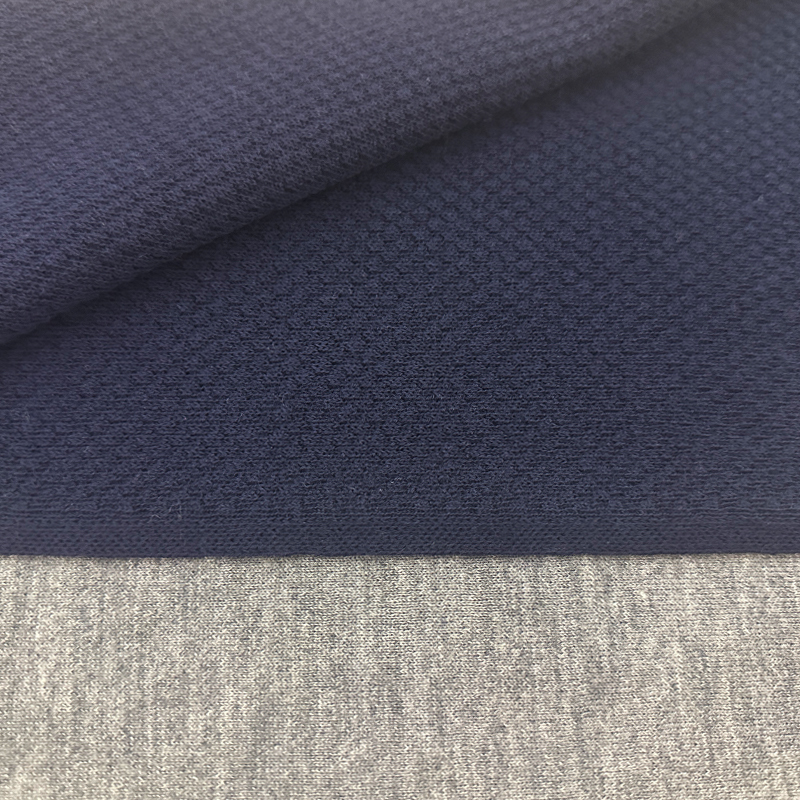 Cashmere-Wool Blend Yarn for Even Hank DyeingThis cashmere-wool blend is suited to hank dyeing, as the relaxed open package allows uniform color absorption while preserving fiber softness and elasticity for premium knitwear.View Product →
At Jiangsu Haoye Fiber Technology Co., Ltd., every production lot is sampled as a skein, not a cone, because a skein reveals twist relaxation, dye penetration, and hand feel exactly the way the finished garment will experience them.
Frequently Asked Questions About Yarn Skeins
Is a skein the same as a hank?
No. A hank is an open ring that must be placed on a swift before use; a skein is a twisted, banded loop used directly or re-wound into a cake. Hand-dyers usually buy hanks, knitters buy skeins, and industrial buyers receive cones.
Why does my skein tangle when I pull from the center?
Center-pull tangling usually means inconsistent winding tension or a crushed center in transit. Re-wind the skein into a cake with a yarn winder; if tangles persist, check that lot for knots or count variation.
How many skeins do I need for a sweater?
An adult worsted sweater needs roughly 900-1,300 m, or six to eight 100 g skeins at 150-200 m each. The same garment in DK takes 1,000-1,400 m, and in bulky 700-900 m. Knit a gauge swatch, then divide the measured yardage by the skein yardage.
Can I order yarn in custom skein sizes?
Yes. A mill with custom development can wind 25 g, 50 g, or 100 g skeins, apply custom labels, split dye lots, and prepare small-batch skeins for sampling before full production. Specify the weight, banding, and lot plan when you request a quote.
Sourcing yarn for a new season? Ask the supplier for a current stock-skein list, a twist report, and wash-test results before you commit to a full lot.



Contact Us for more details
Quick Links
Products
Contact Information
Address: No.2 Huangtai Rd, Yunting, Jiangyin, Jiangsu, China
Tel: +86-510-86018587
Mobile: +86-18261518580
Email: [email protected]
