
 Search


 English
 Français
 русский
 Español
News
 Home / News / Industry News / Deo Yarn Explained: How Odor-Control Yarn Works in Knitwear and Sock Fabrics
Deo Yarn Explained: How Odor-Control Yarn Works in Knitwear and Sock Fabrics
 2026.11.11
 Industry News
After a 12-hour shift, a long-haul flight, or an autumn trail run, a knit top can smell sour even when it still looks clean. The cause is not sweat itself but bacterial metabolism on the fiber surface: microbes break down perspiration into volatile compounds such as isovaleric acid, which the human nose detects at very low concentrations. Deo yarn - textile shorthand for deodorant-functional yarn - is engineered to stop that chain before it starts. If you searched for deo.yarn online, you probably landed on video-clip databases; in the textile industry the same term names a specific product category, and buying decisions depend on the mechanism, the wash durability, and the fiber blend.
What Counts as Deo Yarn? A Working Definition
Deo yarn is a yarn with a built-in odor-management function. A finished knit made from it slows the formation of body odor during wear, and the effect survives multiple wash cycles.
Working definitionDeo yarn is a yarn that incorporates an odor-control mechanism - antimicrobial fibers, adsorbent additives, or odor-binding finishes - so that the resulting fabric measurably reduces perceived body odor compared with an identical construction in standard yarn.
Three facts anchor this definition. Most perceived body odor in knitwear comes from bacterial digestion of sweat, not the sweat itself. Odor control has to survive laundering: a finish that fades after ten machine cycles is a topical treatment, not a deo yarn. And deodorant in textile terminology means suppressing odor generation, not masking it with fragrance.
How Deo Yarn's Odor-Control Mechanisms Work
Every deo yarn on the market relies on one of four mechanisms: ion release, molecular binding, physical adsorption, or encapsulation. The mechanism determines the price, the wash durability, and the fiber types it can be used with.
Ion Release with Silver
Silver chloride or silver-zinc zeolites are embedded in the fiber during spinning or grafted onto the yarn surface. Silver ions disrupt bacterial enzymes and membrane transport, which stops the microbes that produce odor. In a wool-acrylic sock yarn, 0.5 to 2 percent silver masterbatch keeps the effect for 30 to 50 washes.
Molecular Binding with Zinc Complexes
Zinc ricinoleate complexes bind odor molecules directly instead of killing bacteria. They are normally applied as an exhaust finish, they are gentler on wool, and they suit sweaters and scarves where a soft hand is critical.
Adsorption and Encapsulation
Chitosan, derived from crustacean shells, carries amino groups that interact with the acids in sweat. Bamboo and activated charcoal fibers add physical adsorption through high surface area. Cyclodextrin molecules form cage structures that trap volatile odor compounds and release them into the washwater.
| Mechanism | Active Agent | Mode of Action | Typical Content | Wash Durability |
| Silver ion | Silver chloride, zeolite | Disrupts bacterial cells | 0.5 to 2% in fiber | 30 to 50 washes |
| Zinc complex | Zinc ricinoleate | Binds odor molecules | 1 to 3% o.w.f. | 15 to 25 washes |
| Chitosan | Bio-polymer | Interacts with sweat acids | 1 to 2% o.w.f. | 10 to 20 washes |
| Activated carbon | Bamboo or charcoal | Adsorbs volatile compounds | 2 to 5% in blend | Blend dependent |
| Cyclodextrin | Cage molecules | Encapsulates odorants | 2 to 4% o.w.f. | 20 to 30 washes |
For programs that need more than one mechanism in a single yarn, blended routes such as a functional yarn line combine fiber-level ion release with adsorption additives in one spinning program.
 Multi-Functional Yarn for Smart and Protective TextilesThis yarn integrates flame-retardant, conductive, and heating properties in one spinning program, making it relevant for applications where multiple mechanisms are needed in a single yarn.View Product →
What Deo Yarn Delivers in Real Knitwear
Deo yarn performance has to match the application: socks demand durability, base layers demand breathability, and sweaters demand hand feel.
Sock programs are the toughest case: high friction, enclosed footwear, and 12-hour wear cycles. A wool-nylon blend with a silver-based deo finish keeps microbial counts lower through a full day and reduces perceived odor intensity by 80 to 90 percent in comparative wear trials reported by textile laboratories. The nylon content adds abrasion resistance, while the wool buffers humidity.
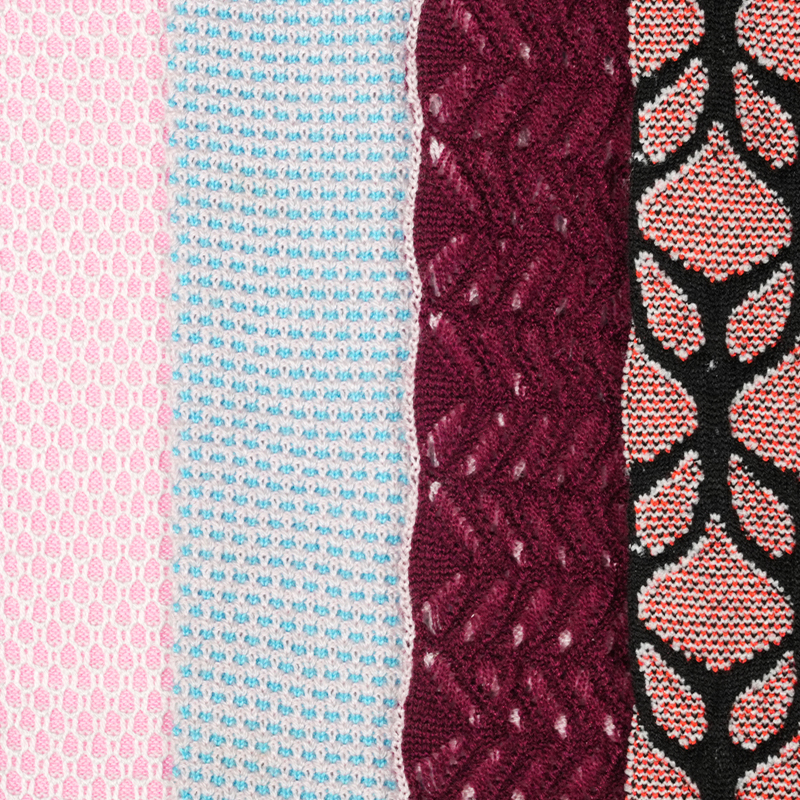 Wool Nylon Yarn with Silver-Based Deo Finish for SocksPositioned after a discussion of sock programs, this wool-nylon blend combines abrasion-resistant nylon with moisture-buffering wool, supporting a silver-based deo finish for demanding wear conditions.View Product →
For base layers and active knitwear, breathability matters as much as the active agent, because a yarn that traps moisture amplifies odor even with a functional finish. Tencel-wool-acrylic blends move moisture away from the skin and lower the humidity that bacteria need, which lets the deo mechanism work longer.
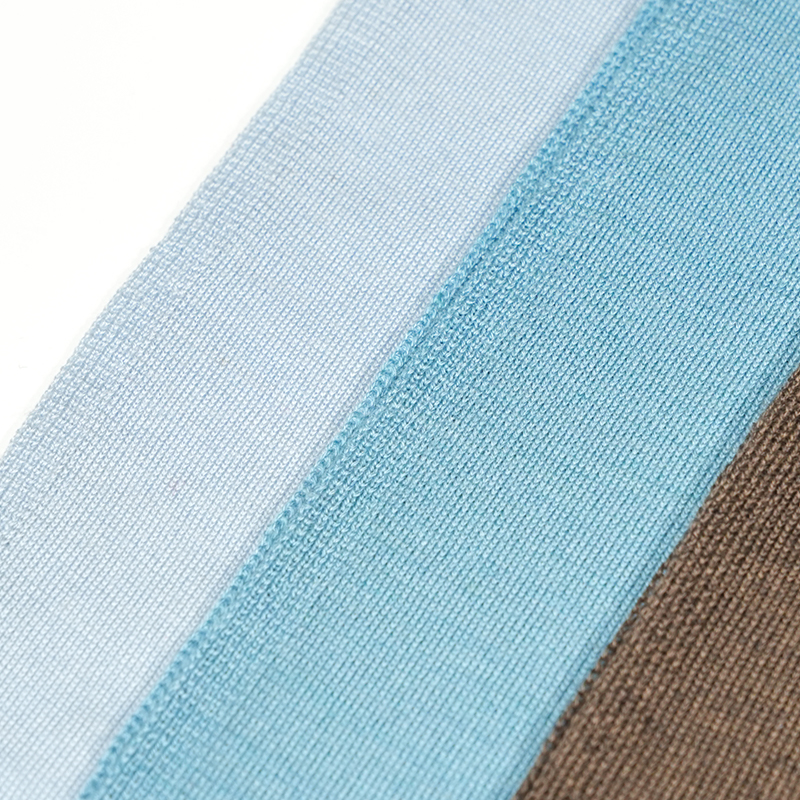 Tencel Wool Acrylic Yarn for Breathable Base LayersFollowing a note on moisture management for active knitwear, this blend of Tencel, wool, and acrylic offers breathability and hand feel suitable for base layers where humidity control supports deo performance.View Product →
Sweaters, cardigans, and scarves are less demanding. Zinc-based or chitosan finishes give premium programs a freshness advantage without stiffening the hand.
In comparative wear trials, a silver-based deo sock yarn holds 8-hour odor intensity below 4 on a 10-point sensory scale; a standard yarn reaches 7.
80-90%perceived odor reduction for silver-based sock yarn
30-50home washes for fiber-embedded silver systems
15-25home washes for topical zinc finishes
How to Verify Deo Yarn Performance Before Ordering
Claims and real performance diverge most between the tenth and twentieth wash, so verification has to include washing data, not just the finished-goods brochure.
Two levels of verification are practical: a fast factory screen while you build the shortlist, and full laboratory validation before you place a bulk order.
Quick Factory Screen
- 5 home washes and line drying
- Sensory panel with 3 to 5 people
- Premium compared with standard yarn
- Active agent and concentration confirmed
Full Laboratory Validation
- ISO 17299-1 or 17299-3 odor test
- ISO 6330 washing protocol
- Antibacterial count (ISO 20743 or GB/T 20944)
- Fiber content and finish add-on analysis
A 10 to 15 percent price premium over standard yarn is normal for a genuine fiber-embedded deo system. A significantly cheaper quote usually means a topical finish that washes out within a few cycles.
Specify the construction precisely, because yarn count and twist affect finish distribution, and deo additives change fiber friction. If the Nm metric count system is new to your team, review it before sending the inquiry.
Sourcing Deo Yarn: Factory Capabilities That Matter
Deo yarn is a systems product - fiber, spinning, and finish chemistry have to be tuned together - which is why factory capability matters more than the raw chemical.
Jiangsu Haoye Fiber Technology Co., Ltd. (yarnfactory.net) has produced worsted and fancy yarn for 21 years. Its 20,000-spindle floor uses Siro and compact spinning, which embeds deo additives evenly, and its five fancy-yarn machine sets combine odor control with boucle, napped, or brushed surfaces. The practical point: an experienced mill adjusts the recipe instead of forcing a standard yarn.
- Ask for the active agent and its carrier: fiber masterbatch or topical finish
- Request wash-durability data at 20 and 30 home washes
- Check OEKO-TEX status and RWS wool traceability
- Order a yarn swatch and a small-batch trial
- Confirm the premium per kilogram and the minimum order quantity
For blend, color, and finish adjustments, Haoye's custom development service covers the whole tuning process, and its quick-sample and small-batch services are designed for exactly this kind of trial.
The practical rule is simple: a deo yarn is only as good as its weakest link. Fiber, spinning, finish, and wash durability have to be verified together, or the garment will smell average again by the third month of use.
Frequently Asked Questions About Deo Yarn
These are the questions knitwear buyers ask most often when they evaluate deo yarn.
Is deo yarn the same as antibacterial yarn?
No. Antibacterial yarn suppresses bacterial growth, while deo yarn reduces perceived odor. The two overlap - an antibacterial yarn lowers odor indirectly - but a deodorant claim should be verified with ISO 17299, not with an antibacterial count alone.
How many washes does the deodorant effect last?
Fiber-embedded silver systems typically maintain measurable activity for 30 to 50 home washes. Topical zinc or chitosan finishes usually drop off after 15 to 25 washes. Always ask the supplier for wash-durability data generated with the ISO 6330 washing protocol.
Does the deodorant finish change the hand feel of wool?
It can. High silver loading can stiffen fine wool, and some topical finishes add a waxy surface. A capable mill adjusts the blend, finish add-on, or spinning parameters so the handle meets your target.
Can deo yarn be dyed, and is it certified?
Yes. Deo yarns take dye in hank or package form, but the active agent competes with dye molecules for fiber sites, so dye-house experience matters. Certifications such as OEKO-TEX and RWS are available; confirm the certificate covers the deo chemistry.
The fastest way to validate a deo yarn is to order a swatch, wash it 20 times, and run a simple sensory panel. Everything else is paperwork.



Contact Us for more details
Quick Links
Products
Contact Information
Address: No.2 Huangtai Rd, Yunting, Jiangyin, Jiangsu, China
Tel: +86-510-86018587
Mobile: +86-18261518580
Email: [email protected]
