
 Search


 English
 Français
 русский
 Español
News
 Home / News / Industry News / 4 Ply Yarn Weight Explained: Ply vs Thickness, Gauge, and Substitution
4 Ply Yarn Weight Explained: Ply vs Thickness, Gauge, and Substitution
 2026.11.04
 Industry News
Your pattern calls for 4 ply yarn weight, the ball band says 4 ply, and your gauge swatch still comes out two stitches wider than the gauge box. The yarn is not defective, and you are not counting wrong. In a modern spinning mill, the label "4 ply" describes construction: four single strands twisted together. The thickness of each strand is a separate number that most labels never print. That gap explains most 4 ply yarn weight confusion, and the fix starts with one sentence: ply and thickness are two different measurements that only overlap because of an old British naming habit.
4 Ply Yarn Weight: What the Term Really Means
Four ply means exactly four strands twisted together, nothing more and nothing less. The same 4-ply construction can knit at lace density or at sport density, because the number of plies tells you how the yarn was assembled while the thickness of each strand tells you how heavy the result will be.
The name comes from 19th century English spinning practice, where mills spun standard singles of similar fineness. A 4-ply yarn was therefore predictably thicker than a 2-ply, and the word ply became a rough weight label. Modern worsted and fancy spinning lines produce singles at many different counts and twist them into every combination, so that old assumption no longer holds.
Core definition
Ply is the number of single yarns twisted together. Yarn weight is the linear density of the finished yarn, measured in meters per 100 g, wraps per inch (WPI), or stitch gauge. The two are independent numbers.
A single strand can be spun as fine as Nm 40 or as coarse as Nm 10. Four Nm 40 singles plied together produce a cobweb-lace yarn near 1000 m per 100 g; four Nm 10 singles produce a lively sport-weight yarn near 250 m per 100 g. Both are honest 4-ply yarns, and that range is why the label alone cannot set your gauge.
How 4 Ply Yarn Weight Maps to Modern Weight Standards
In current hand-knitting terminology, 4 ply still translates to fingering or sock weight: roughly 350 to 450 m per 100 g, 27 to 32 stitches per 10 cm, and 3.25 to 3.75 mm needles. This mapping is conventional, not mathematical, and it works because most commercial 4-ply yarns for hand knitting are spun with similar single counts.
Use the conversion table as a starting point, then confirm with meterage and a gauge swatch.
| Ply label | US category | WPI | Stitches per 10 cm | Needle size |
| 2 ply | Lace (0) | 16+ | 33+ | 2.25-3.0 mm |
| 3 ply | Light fingering (0-1) | 15-16 | 30-33 | 2.5-3.25 mm |
| 4 ply | Fingering / Sock (1) | 14 | 27-32 | 3.25-3.75 mm |
| 5 ply | Sport (2) | 12-13 | 23-26 | 3.5-4.0 mm |
| 8 ply | DK (3) | 11 | 21-24 | 4.0-4.5 mm |
| 10 ply | Worsted (4) | 9-10 | 18-20 | 5.0-5.5 mm |
| 12 ply | Bulky (5) | 7-8 | 12-17 | 6.0-8.0 mm |
Because the mapping is a habit, some brands sell a single-ply or two-ply yarn with a "4 ply feel" and label it by the weight class. Read the meters per 100 g first, then the ply count second, and let the swatch make the final decision.
Why Two 4 Ply Yarn Weight Choices Knit Differently
Final thickness is set by the linear density of the singles; the number of plies only multiplies it. That is why one 4-ply merino knits at 28 stitches per 10 cm while another 4-ply blend knits at 24.
Take two commercial yarns. Yarn A is a 4-ply pure wool fingering at 400 m per 100 g; Yarn B is a 4-ply wool-nylon at 320 m per 100 g. Both are legitimate 4-ply constructions. Yarn A suits shawls, lace panels, and baby knits, while Yarn B suits dense sock fabric and hardwearing cuffs. The four-ply label hides the entire difference.
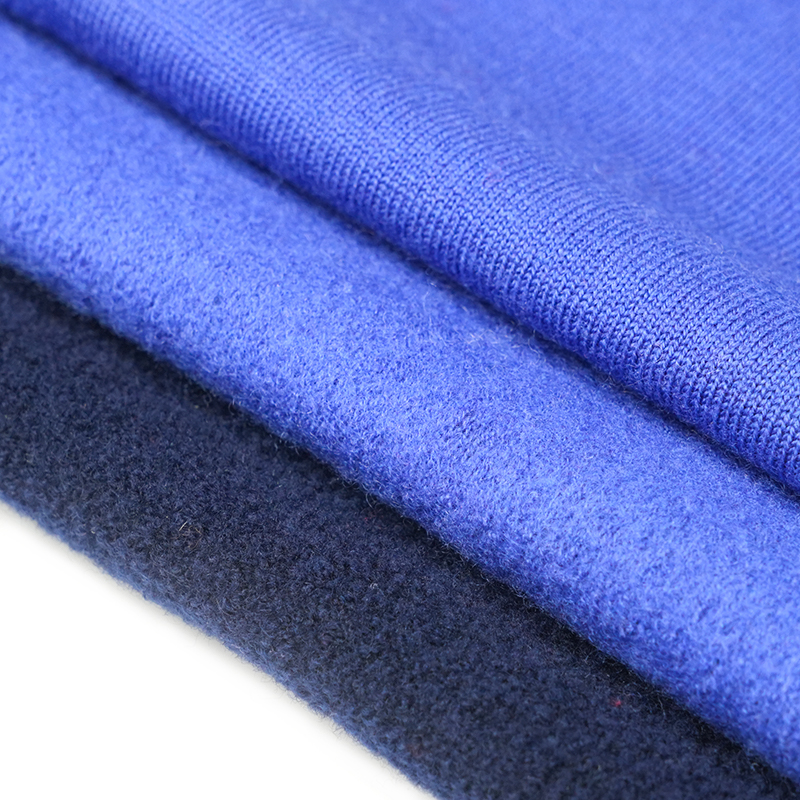 Pure Wool 4-Ply Fingering Yarn for Delicate KnitsThis 400 m per 100 g pure wool 4-ply yarn suits shawls, lace panels, and baby knits. Its fine, soft fibers and crisp stitch definition make it a reliable choice when exploring yarn twist and gauge differences.View Product →
Lace
600 m
4 ply
400 m
Sport
330 m
8 ply DK
260 m
10 ply
200 m
12 ply
120 m
Typical meters per 100 g by weight category. 4 ply sits at about 400 m.
Twist changes the picture as well. A high-twist 4-ply yarn grips itself tightly, produces crisp stitch definition, and resists pilling in high-friction areas; a low-twist 4-ply blooms into a softer, fuzzier surface. Two yarns with the same count but different twists per meter will not knit to the same gauge.
How to Substitute a 4 Ply Yarn Weight Safely
Match meterage, wraps per inch, and stitch gauge; never match the ply count. A single-ply yarn with the same meters per 100 g can substitute for a 4-ply, and a 4-ply yarn will fail in a pattern that assumes a finer single.
Run through this checklist before swapping any yarn into a 4-ply pattern:
- Meterage: stay between 350 and 450 m per 100 g for fingering-class 4 ply.
- WPI: wrap the yarn around a ruler over 2 inches and divide by 2; 14 WPI is the 4-ply zone.
- Needle: start at 3.25-3.75 mm, then adjust for the fabric you want.
- Fiber: wool-nylon for socks, superwash or TEC-treated wool for everyday wear, Tencel-wool blends for drape.
- Twist: high twist for stitch definition and durability, low twist for softness and surface halo.
Pattern calls for 4 ply
27-32 stitches per 10 cm, 3.25-3.75 mm needles, about 400 m per 100 g, crisp stitch detail for lace and texture.
Yarn store says 4 ply
Might be an 8-ply thickness relabeled, or a two-ply yarn that knits like 4 ply. Read meterage before buying, and swatch before committing.
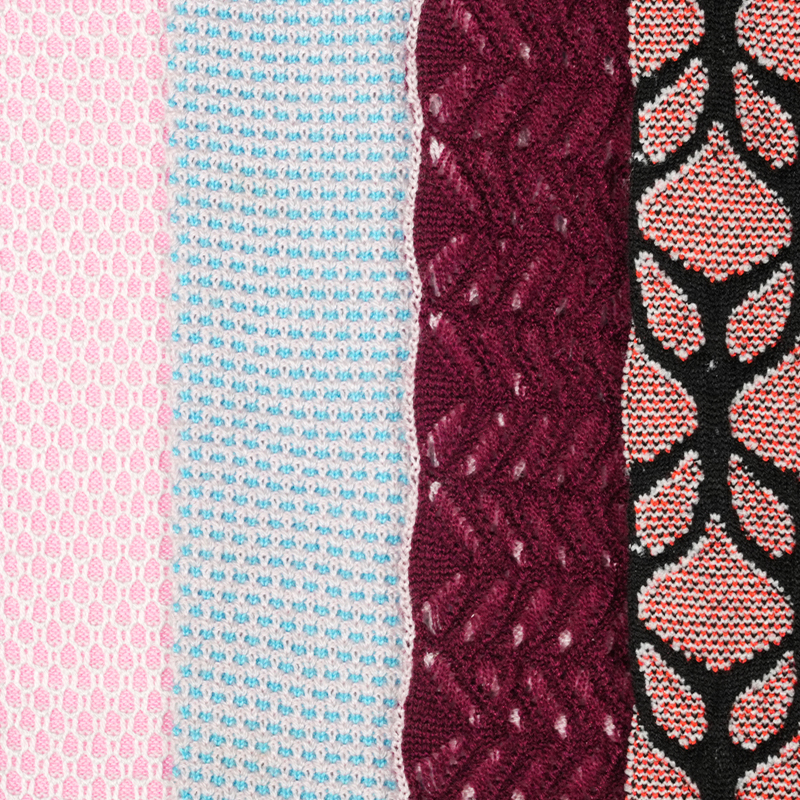 Wool-Nylon 4-Ply Sock Yarn with Added DurabilityBlending wool's warmth with nylon's toughness, this yarn offers elasticity, abrasion resistance, and long-lasting shape. It is a standard choice for dense sock fabric and hard-wearing cuffs at tight gauges.View Product →
For sock projects, a wool-nylon 4-ply around 400 m per 100 g is the standard durability package; the nylon lifts abrasion resistance, and the balanced twist keeps stitches even at tight gauges.
How a Commercial Mill Specs a 4 Ply Yarn Weight
A factory order for 4 ply yarn is written as count, twist, and finish. The phrase "4-ply fingering" is a retail term; the production sheet says Nm 16/4, 600 TPM, S-twist plying, superwash finish.
The metric notation reads as follows: Nm 16/4 means four plies of Nm 16 singles, which combine to a finished count of Nm 4, or about 400 m per 100 g. If this arithmetic is new to you, the guide to NM yarn count explains it with worked examples.
Sample production spec - 4-ply fingering base
Count Nm 16/4, 400 m per 100 g, Z-twist singles, S-twist ply, TPM confirmed against master sample, +/-3 percent lot tolerance, OEKO-TEX standard.
Twist direction is a real specification, not a detail. Singles are usually spun with a Z twist and then plied in the opposite S direction; reversing that order changes the hand feel and the tendency to kink. Even twist matters because variations in TPM surface as neps and uneven dye take-up.
Scale makes consistent 4-ply production possible. Jiangsu Haoye Fiber Technology Co., Ltd. produces worsted yarn on 20,000 spindles with Siro and compact spinning, and can hold count and twist within tight lot tolerances. When a standard base does not fit, most mills will spin a custom 4-ply yarn - your specified Nm, TPM, fiber blend, and finish - through a custom yarn development program, usually starting with a 1 kg to 5 kg sample lot.
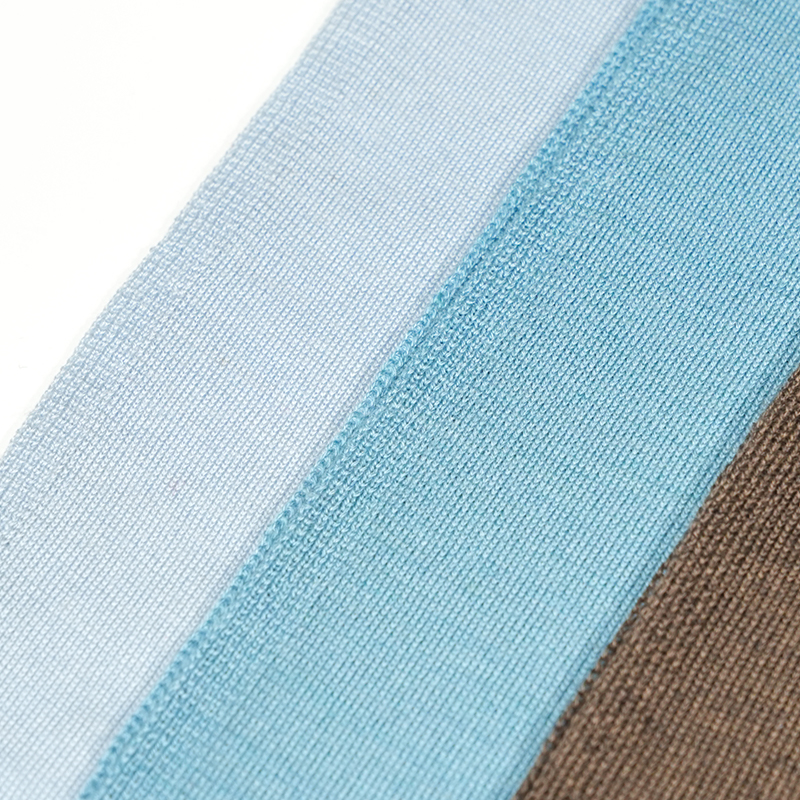 Tencel Wool Acrylic 4-Ply Blend for Seasonal WearThis blend combines Tencel's coolness, wool's warmth, and acrylic's wrinkle resistance. Ideal for spring and summer knitwear, it provides breathability, comfort, and dimensional stability in the 320–380 m range.View Product →
For spring and summer knitwear, a Tencel-wool-acrylic 4-ply in the 320-380 m per 100 g range delivers the cool hand of Tencel, the memory of wool, and the dimensional stability of acrylic.
4 Ply Yarn Weight: FAQ
Is 4 ply the same as fingering weight?
In UK and Australian labeling, yes. 4 ply corresponds to fingering or sock weight, US category 1, with a typical gauge of 27-32 stitches per 10 cm and a needle recommendation of 3.25-3.75 mm. Check the meterage on the ball band anyway.
What does the ply count tell me about yarn thickness?
Nothing direct. Ply count tells you how many strands are twisted together; thickness is determined by the linear density of those strands. Modern mills make 4-ply yarns anywhere from lace density to sport density.
Can I use 8 ply yarn instead of 4 ply?
Only if you plan to re-engineer the project. 8 ply is roughly double the thickness of 4 ply, so a 4-ply pattern knitted in 8 ply will come out about one and a half sizes larger, with a different needle, row count, and yarn estimate.
What needle size should I use for 4 ply yarn?
Start with 3.25-3.75 mm for standard 4-ply gauge. For firm sock fabric, drop to 2.5-3.0 mm; for a lacy shawl, go up to 4.0 mm. Swatch every yarn because twist and fiber change the correct needle.
Rule of thumb: when a pattern says 4 ply, start with about 400 m per 100 g, knit a 10 cm swatch, and change the needle until the gauge box is satisfied.



Contact Us for more details
Quick Links
Products
Contact Information
Address: No.2 Huangtai Rd, Yunting, Jiangyin, Jiangsu, China
Tel: +86-510-86018587
Mobile: +86-18261518580
Email: [email protected]
