
 Search


 English
 Français
 русский
 Español
News
 Home / News / Industry News / What are the structural and technological characteristics of Ordinary Fancy Yarns?
 What are the structural and technological characteristics of Ordinary Fancy Yarns?
 2025.12.08
 Industry News
In the textile industry, Ordinary Fancy Yarns have always played a unique role. Through their distinctive structure and texture, Ordinary Fancy Yarns bring rich visual effects and tactile experiences to fabrics.
Basic Construction of Fancy Yarns
The main difference between Ordinary Fancy Yarns and ordinary yarns lies in the diversity of their structures. They typically create special visual and tactile effects by adding twist variations, pitch control, and fiber composites to the main yarn. While the structure of this type of yarn is not as exaggerated as high-end complex fancy yarns, its balance of simplicity and refinement allows it to endow fabrics with a unique artistic feel while ensuring fabric performance.
During the manufacturing process, Ordinary Fancy Yarns emphasizes precise control of yarn tension, twist, and fiber distribution. Even slight variations can significantly affect the final appearance and feel of the yarn. This precise control requires highly stable production equipment, and process parameters must be strictly defined and implemented to ensure the consistency of each batch of yarn.
Process Details and Technical Requirements
The core of Ordinary Fancy Yarns' process lies in "structural control." By locally thickening or twisting the main yarn, or embedding special fiber segments in the yarn, regular or random texture variations are created, achieving a combination of decorative and functional effects. The production of this type of yarn typically involves high-precision twisting and stretching processes to ensure the yarn achieves an optimal balance between strength and softness.
During the yarn stretching process, Ordinary Fancy Yarns requires precise management of the fiber's elasticity and extensibility. The blending ratio of different fibers, the frequency of twist changes, and the length of the thickened segments all affect the overall stability of the yarn. Precise process design not only ensures the yarn's uniformity but also allows for the achievement of desired patterned effects on the fabric, giving the yarn a rich visual texture.
Balance of Performance and Hand Feel
Ordinary Fancy Yarns emphasizes both functionality and aesthetics in terms of performance. Compared to ordinary plain yarn, fancy yarns have higher requirements in terms of abrasion resistance, elasticity, and breathability. Subtle variations in yarn structure can affect the physical properties of fabrics, therefore, factors such as fiber type, twist, and yarn density must be considered comprehensively during the design phase.
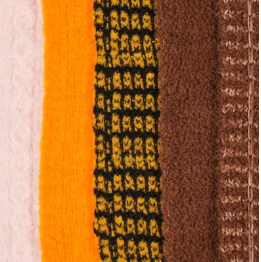
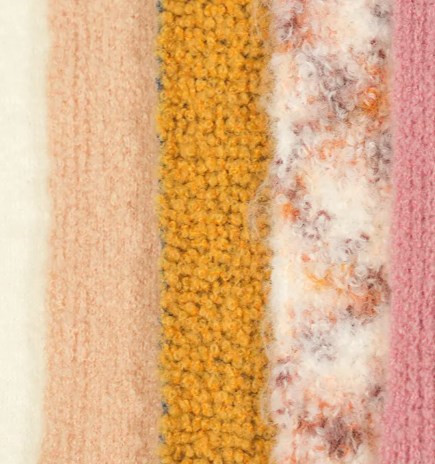
Hand feel is another major advantage of Ordinary Fancy Yarns. The surface variations of the yarn create a unique tactile experience, making the fabric not only visually appealing but also enhancing the user's tactile experience. This type of yarn performs exceptionally well in clothing, home textiles, and decorative materials, achieving an ideal balance between comfort and aesthetics.
Application Potential and Fabric Performance
Ordinary Fancy Yarns are widely used in clothing fabrics, home textiles, and creative decorative materials. Due to its simple yet varied structure, the fabric can express design through the texture of the yarn itself, without the need for additional printing, dyeing, or finishing. Ordinary Fancy Yarns impart a natural sense of layering and movement to the fabric, allowing designers to enhance the aesthetic value of the product while maintaining the material's functionality.
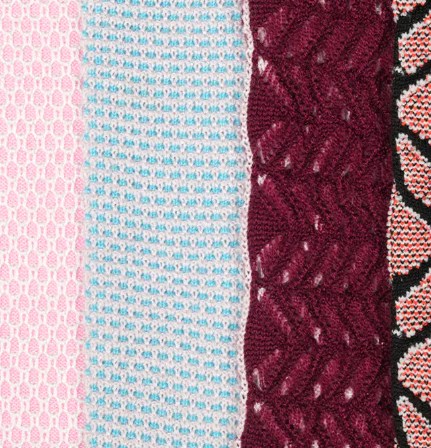
In terms of fabric performance, this type of yarn can exhibit rich textural effects under different weaving methods. Whether plain weave, twill, or knit, Ordinary Fancy Yarns creates unique visual effects through structural variations, adding dynamism and delicacy to fabrics.
Market and Product Positioning
While Ordinary Fancy Yarns may not be as sophisticated in its manufacturing process as high-end, complex fancy yarns, its production cost is relatively moderate, making mass production easier. This gives it a high cost-performance advantage in the apparel and home textiles market. In terms of product positioning, Ordinary Fancy Yarns emphasizes the combination of practicality and aesthetics, providing mid-to-high-end consumers with yarn options that combine comfort and design.
These yarns are highly versatile, capable of meeting diverse design needs. By rationally selecting fiber combinations and twist parameters, manufacturers can customize yarn performance for different application scenarios, thereby expanding the product's market application range.
FAQ: Frequently Asked Questions about Ordinary Fancy Yarns
Q: What is the biggest difference between Ordinary Fancy Yarns and ordinary yarns?
A: Mainly in structure and visual effect. Ordinary Fancy Yarns achieve unique textures and feels through localized thickening, twisting, or embedding of fiber segments, while ordinary yarns focus more on uniformity and basic properties.
Q: What fabric applications is this yarn suitable for?
A: Suitable for various apparel fabrics, home textiles, and decorative materials, showcasing layering and movement through the yarn's inherent structure.
Q: Which processes are most critical during production?
A: Yarn tension, twist control, and fiber distribution are key. Even minor deviations can affect the final yarn's appearance and feel.
Q: What are the market advantages of Ordinary Fancy Yarns?
A: Combining aesthetics and practicality, moderate cost, mass production capability, and the ability to meet diverse design needs, offering high cost-effectiveness.
Q: How is the yarn's stability and feel ensured?
A: Through precise process control, including the accurate design of fiber blending ratios, twist variations, and the length of thickened segments, the yarn achieves an optimal balance between strength and softness.



Contact Us for more details
Quick Links
Products
Contact Information
Address: No.2 Huangtai Rd, Yunting, Jiangyin, Jiangsu, China
Tel: +86-510-86018587
Mobile: +86-18261518580
Email: [email protected]
